Sustainability is a real buzz-word, used to the point of exhaustion. But truthfully a lot of what we hear about sustainability is just a ploy to sell us something, some new product that is “green” or “eco”.

So what is sustainability? From Wikipedia: “Sustainability is the capacity to endure. In ecology, the word describes how biological systems remain diverse and productive over time.”
So in a sense, only Nature is truly sustainable.
So how do we create systems that remain diverse and productive over time? By mimicking Nature.

However, it seems like the world is going the opposite way, with WalMart selling the same products the world over, and Monsanto creating foods that are not only foreign in nature, but are genetically identical and proprietary. On top of that, they are planting these experimental crops in pristine and sensitive places, like Hawaii, polluting local seed-stock forever.
And now the US Organic Elite has surrendered to agricultural giant Monsanto and their Frankenfoods. In a statement released recently, Organic Valley, Stonyfield Farms, and Whole Foods said that we must accept GMO’s (genetically modified organisms), and work with them.
What? Did I really read that?
Turns out over 2/3rds of Whole Foods’ products contain GMO’s, unlabelled.
This is not healthy food. Boycott these companies.

Perhaps 10% of the world feeds itself. The rest of us rely primarily on centralized distribution from industrial farms (organic included). And the same goes for our water and energy supplies. This is a sticky situation.

On the contrary, Kiwis are historically self-reliant, in particular with respect to feeding themselves. New Zealand is particularly suited to growing a wide variety of crops, thanks to a mild climate, good soils, and abundant water. The Maori were (and still are) incredible farmers, growing produce for the new colonies in the South Pacific.
 We felt like we were on the set of Lord of the Rings...
Lothlorien Winery was the first Certified Organic orchard in New Zealand, back in the ‘70s. Started by Dale Demulemeester and friends, they decided to plant peaches and feijoas (pineapple guavas). The peaches sold great, but soon went out of production. The feijoas continued to thrive, so they planted more.
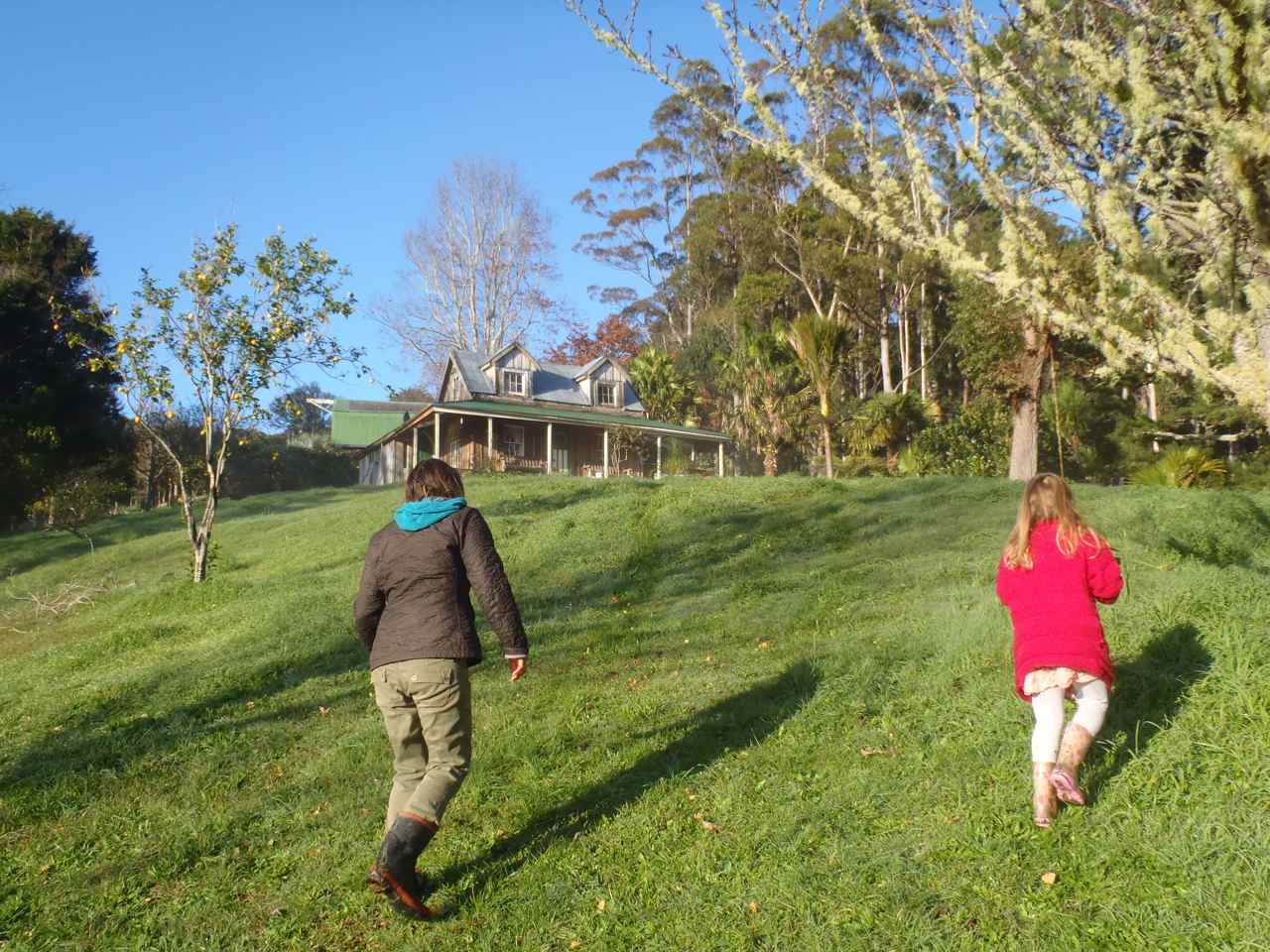 No roads to the house is quite refreshing
 The "fridge"
 Jo grows bananas, in NZ!
 Dale and a little milk for your coffee, straight from the udder
Now many hundreds of seedling trees are gracing the gently slopes of the Puhoi Valley. These trees are all genetically different from each other, and this imparts disease resistance to the farm and also a fine flavor to their wine. That’s right, organic sparkling feijoa wine.
 Unfortunately you will have to travel to NZ to sample- no exports :(
While alcohol may be a luxury, lets be frank, it can be medicinal. One sip of this amazing concoction puts an ear-to-ear grin on your face. Best of all, its organic, truthfully.
 Eli Demulemeester and a crate of liquid gold
Wine is not the only crop at Lothlorien. They have many citrus, pecan, macadamia, banana, avocado, a dairy cow, chickens, and vegetable gardens tended by Dale’s wife Jo. They also planted pines and eucalyptus on barren slopes 30 years ago, and now they are being harvested by the next generation to build their homes.
 Eucalyptus flooring grown on site
 What is behind the doors we left for the next generation?
Three generations of the Lothlorien clan live and work on the farm, tending trees and making wine. Eli and his brother and sister along with their families are taking the reigns of the farm from Dale.
 Koko, Kim, Eli, and Tally Demulemeester
We then made our way south to Whaingaroa, the harbor more known for its surf spot than sustainability movement. Turns out its quite a little pocket of regional resilience.


Local crew are stepping up, with city parks turning into food forests, and organic farms popping up all over the region. They are also looking into microfinance and waste issues.

 A young food forest in a local city park
Xtreme Waste was conceived by Liz and Rick Thorpe, the goal to reduce the local waste stream to zero. This is a feat in itself, deserving a separate blog entirely. As if this wasn’t enough to keep them busy, they also double as small-scale permaculture farmers.


Mixed fruit orchards surround a beautifully hand made house, ducks grazing beneath to keep the growth at bay and provide eggs. They plant vegetable crops like garlic, which we helped to separate for planting in a family style community atmosphere. They open the farm up every Tuesday to anyone who wants to come out and help.


Community is the cornerstone to local resilience, and this is also demonstrated in a big way at Kaiwhenua Gardens, run by Lynne and Kaiwaka Riti. Kaiwhenua translates directly to “Land of Food”, and Kaiwaka is the “Canoe of Food”, feeding the local whanau, family.
 Kaiwaka Riti, tupuna of organics
 Kai Whenua Gardens- Land of Food
We arrived at Kaiwhenua the same time as local school kids came to get their hands dirty. We weeded around, and sampled delicious young carrots.


 Possibly more eating than weeding took place...
We got a tour and met the kunekune pigs, who were happily weeding out kikuyu grass from under some trees. Kunekune are traditional Maori pigs, and are the only breed that can live off of grass exclusively.
 Possibly the ugliest, and cutest animal at the same time
 Kaiwhenua is also part of a new certification structure based on traditional Maori values. Hua Parakore, Pure Produce is a movement to take back the organic food standards from corporate interests.
 Keepin' it Clean and Green in NZ!
Just down the road at the base of the point is another example of a community in action, this time an eco-retreat turned Permaculture Demonstration Site called SolScape.

 Phil McCabe of SolScape holds up on of his experimental Earth Bricks
SolScape has been run by Phil and Bernadette McCabe for the last ten years as a backpackers with an eco twist, and now they are ready to take it to the next level. A collaboration with Otago University created the Practical Sustainable Living curriculum to be taught on site overlooking the majestic Tasman Sea.
 Cool Caboose room


We had a chance to join Phil for a tour with a group of American high school students with Global Adventures. We saw the eco-batch made from local and recycled materials, the earth bag domes, and the tipi site with solar hot water and composting toilets.


SWoBs is in discussion with SolScape about hosting Permaculture Surf Retreats on site. Participants will surf in the morning and learn in the afternoon, and a project will be created in the local community to help with local resilience. Stay tuned for more!

 We got our hands dirty while in Waikato

That's all for now, thanks for reading!


 Posts
Posts

