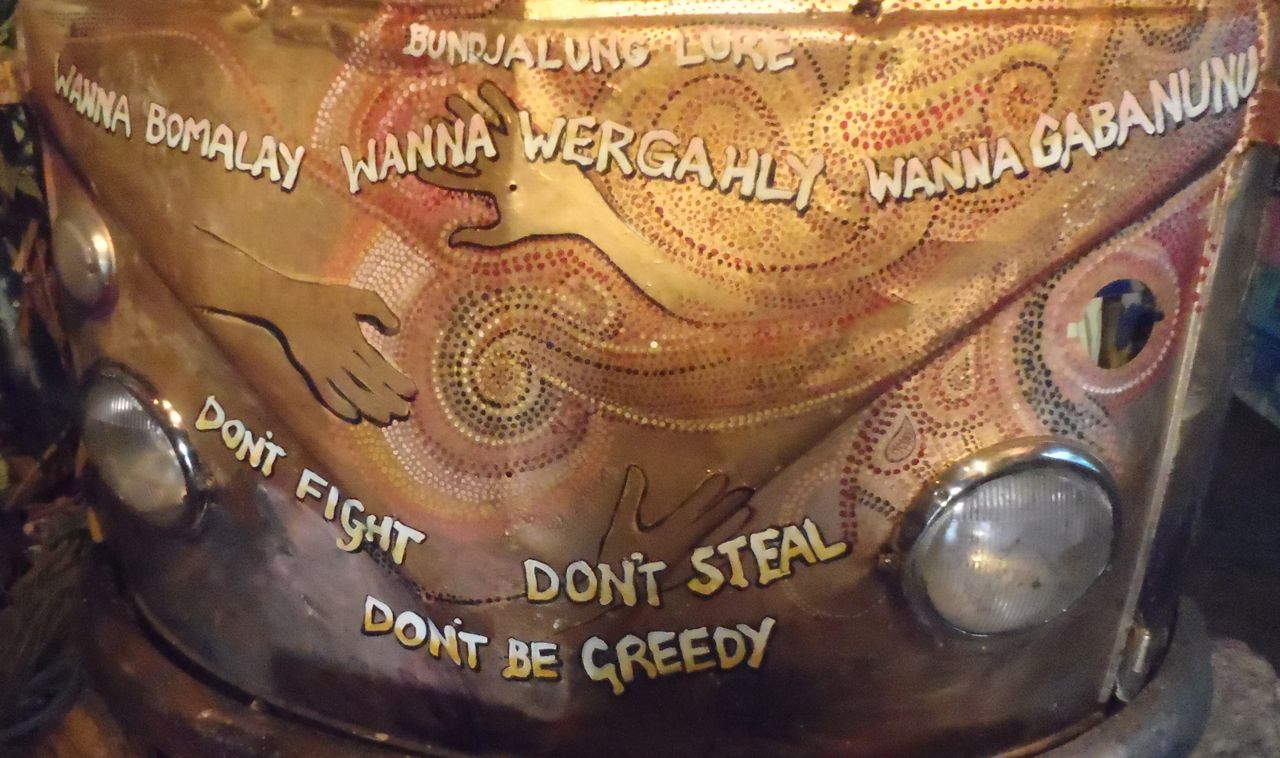
 Follow Bunjalung Lore and Everything will be fine:
Don't Fight, Don't Steal, and Don't be Greedy
Australia is an ancient continent, with lots of new things going on. The red soils tell the story of aeons of evolution, continuing to support abundant life. Natural Resources are abundant, including timber, precious metals, and coal.


On the outskirts of town, Eucalyptus forests brimming with flocks of parrots line the road and kangaroos graze in the grass. “The Bush” as the forest is called, is still alive in this area, though mainly second growth after the cedar logging industry of the 1800’s.

 Parrots and Pandanus are common in Northern NSW
The East Coast from Sydney north to Queensland is an almost continuous forest dotted with hamlets and the occasional big city. Though the cities don’t feel too city, they hold lots of people.


 The Ocean is so beautiful
The ocean is a way of life for many here- Aussies are right into beach-going and surfing. They are into lots of things nature and sporty, and are always keen to “get amongst it”. The Bush rules in Australia, and many people enjoy it on the weekends, or lead a rural lifestyle.


For this reason, awareness is rising about an environmentally treacherous industry that is making it’s way from the Good Ol’ US of A to Australia- that of
Coal Seam Gas (CSG) Mining.

Masquerading as a "clean" solution to our growing energy needs, CSG mining is anything but. In the USA, over
500,000 gas wells are currently in use, with a significant increase projected for the near future. Many of the communities surrounding these wells have reported startling and
downright scary experiences associated with the mining.

In the documentary film “
Gasland”, the process and the results of Coal Seam Gas mining in the United States is examined. This is a must see for anyone concerned about this issue.
 What the Frack?
Coal Seam Gas is also called Coalbed Methane, and the gas surrounds and fills porous coal deposits. In order to extract the gas, a well is drilled into the coal bed and a liquid is pumped into the well bore which fractures the earth around the well, freeing the gas and causing it to rise to the surface. This practice is called Hydraulic Fracturing or “Fracking”.

This sounds great in theory, but in practice
fracking is almost an inevitable nightmare of side effects.Since the wells often drill down many thousands of feet (up to 12,000 ft or 3500 m), they may penetrate many
underground water reserves on the way. The fracking process destroys the layer between coal deposits and aquifers, causing the gas to rise into the groundwater, polluting it with methane.
 A spider's web of wells dotting the landscape of QLD, Aus
The fracking fluid itself is a proprietary blend of over
600 chemicals that are not registered or even declared by the industry. In the USA, a the
2005 Energy Bill exempted Oil and Gas Companies from the Safe Drinking Water Act, which meant they could basically pump whatever they wanted into the wells with little or no oversight from the Environmental Protection Agency.
(US former Vice President Dick Cheney, who was also the former CEO of Halliburton, was an author of the bill. Conveniently, Halliburton invented the fracking process and is the major installer of CSG wells. There really is no difference between the Oil and Gas Companies and the Government that is supposed to regulate them. ) A typical well site with associated infrastructure and effluent ponds
The fracking fluid may also end up in the groundwater and surface waters as a normal practice and from
accidents during drilling. Up to several million gallons of water are used per frack, with up to 18 fracks in the lifetime of the well. That is around 50 million gallons of water per well, contaminated with untold chemicals, pumped straight into the groundwater, on purpose. Read the
LA Times article about concerns over fracking.

This is apparently happening in our home-town of Santa Barbara as well. A recent
article in the SB Independent by our dear friend Ethan Stewart sheds light on the dark cloud that is approaching our seaside community. Apparently, local oil company Venoco Inc. has been using fracking in several gas wells in SB County without telling anyone at the local level…
no bueno.

It looks as if Venoco hopes to "exploit" the Monterrey Shale formation, hailing it as the most productive "shale play" in the US. The formation goes from Santa Barbara to Sacramento and passes through some of the largest aquifers in the state.
 CSG Mining is about the worst thing you could possibly do to the Earth, which includes us.
 Basically, the water table becomes polluted immediately. People living near CSG wells are experiencing unbelievable consequences to their water supplies, including severe health problems like severe body pain and brain tumors. Many water wells near CSG wells are so polluted with natural gas that the
tap water can be lit of fire!!!
This is not right. This is not okay.
Yet the gas companies and the governments still claim fracking is safe. Despite thousands of reports of illness and even
water wells exploding. If there still can be a doubt if this is safe, read the recent
study by Duke University about the dangers of water pollution from fracking.
 America’s Worst Export
Both New South Wales and Queensland are being
hailed as the future of energy in Australia, with CSG and Liquified Natural Gas (LNG) as the main industries.
Projections are that Coal and Coal Seam Gas mining will increase 10 fold in the next 10 years. American Oil Companies are right into it, including ConocoPhillips.


Oil Companies are actively placing gas wells on private property, often without the consent of landowners. Actually,
the Oil Co’s are granted rights to the mineral resources under private properties by the Australian Government, similar to the USA. Watch the
60 minutes Aus report on CSG in QLD.
 Local resistance is on the rise.
 The
Lock The Gate Alliance is creating a forum for people to express their concerns and the realities of CSG mining in Australia. They also take action- like
blockading the miners.


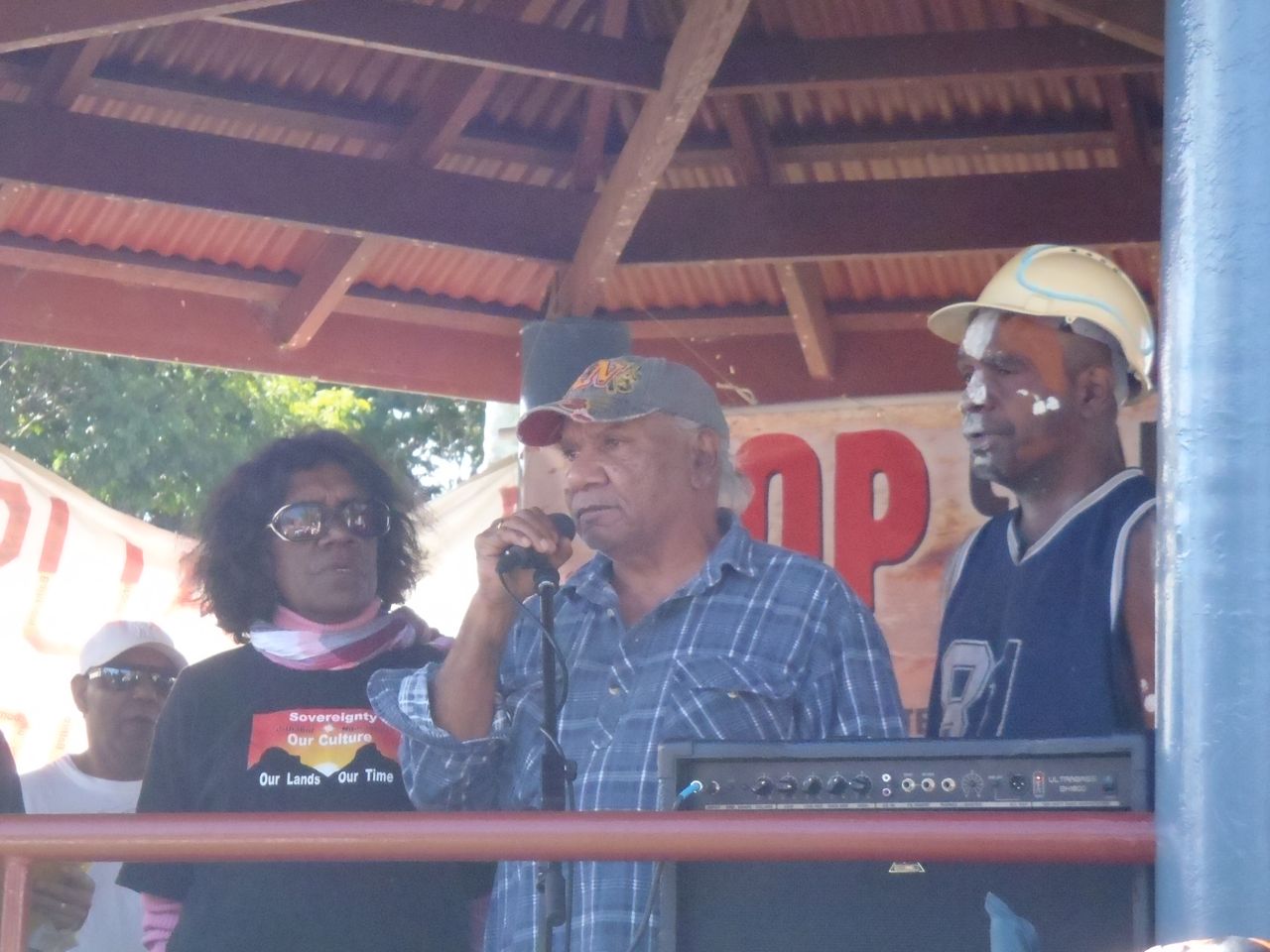
We attended a rally in Northern New South Wales organized by Lock the Gate. Over 3000 people of all demographics peacefully marched the streets of Murwillumba NSW. The march culminated in a rally at the town park, where indigenous leaders, farmers, and concerned citizens educated the public on the dangers of CSG.


 So what’s the solution?
All of this nonsense and madness is not necessary.
There is no need to ruin groundwater supplies for untold years for a supply of natural gas that may last less than one person’s lifetime.

We have all of the energy we need right now, and it can be created from waste. Yes I am talking about BioGas again, or methane derived from rotting organic matter. This is in fact the same gas that they are extracting from the Coal Seam, so the infrastructure already exists to use methane for electricity generation. We can just substitute BioGas for CSG- no tweaking (or at least very little) needed.
 This landscape would be unaffected by small scale BioGas production, unlike CSG mines...
 BioGas generation is not complicated. In
India households are installing small-scale BioGas Digesters that provide all of their gas needs for cooking, from vegetable scraps! What if we went the next step and connected digesters to septic tanks, and turned potential pollution into electricity?
 Keep it Green!
Farms are using methane to power their operations all over the world. Communities are trapping gases from landfills and sewage treatment facilties that would otherwise cause air pollution.
This is the industry we need to support on a government level, instead of one that stands to benefit only Big Oil. Would you mess with this girl?
Stay tuned for an Update on the Permaculture Tour Australia 2011, for more Solutions To Pollution Through Sustainable Design!
Thanks for reading. Keep the faith.For more on the issues of CSG:
http://coalseamgasnews.org/Links specific for Australia:Concerns over chemicals used in CSG mining:
http://www.abc.net.au/news/stories/2011/02/22/3145060.htmPipeline location info:
http://www.qhgp.com.au/Interactive map for mine locations in QLD:
http://www.dme.qld.gov.au/mines/interactive_resource_data.cfmMap of mining operations in NSW:
http://www.dpi.nsw.gov.au/minerals/info/project-maps
 Take the Green Road
 The Big Black Book

 A djanbung, or platypus, graces the walls at Djanbung Gardens
 Robyn Francis, the First Lady of Permaculture, and steward of Djanbung Gardens


 BioChar made from Eucalyptus twigs and macadamia nut shells
 Bamboo construction
 Compost Tea demonstration
 Organic vegie seedlings for sale
 Treats from the garden including Robyn's Own Tabasco Sauce- delicious!
 SWoBs gave a short presentation to the group


 The rocket stove shower rocked!
 Chris with the super beefy solar power system
 Nursery to propagate fruit and native trees
 The graduating class!
 A new swale before planting
 After planting...
 The ponds are connected by swales, and are filled with fish






 Posts
Posts

