May 22, 2011

Got Coal Seam Gas?

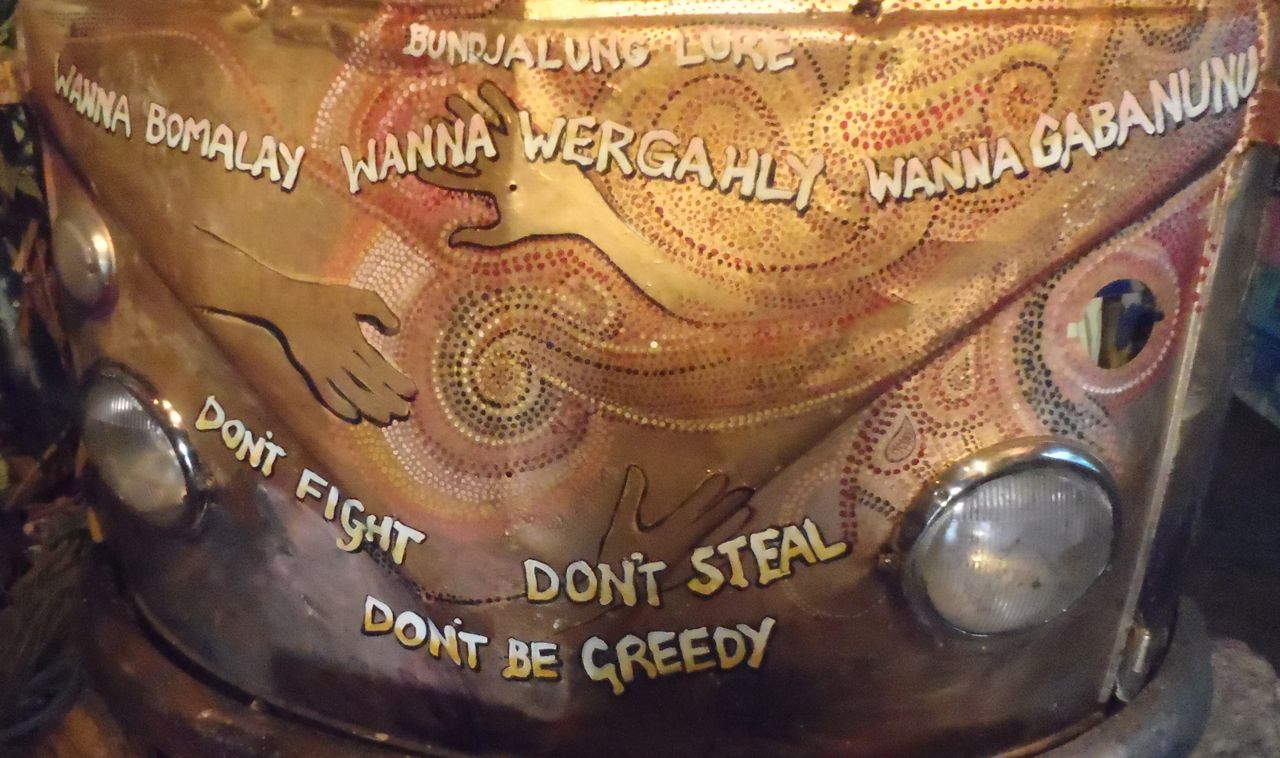
Follow Bunjalung Lore and Everything will be fine:
Don't Fight, Don't Steal, and Don't be Greedy


SWoBs Down Under Episode 3: Australia East Coast- Got Gas?

Australia is an ancient continent, with lots of new things going on. The red soils tell the story of aeons of evolution, continuing to support abundant life. Natural Resources are abundant, including timber, precious metals, and coal.


On the outskirts of town, Eucalyptus forests brimming with flocks of parrots line the road and kangaroos graze in the grass. “The Bush” as the forest is called, is still alive in this area, though mainly second growth after the cedar logging industry of the 1800’s.

Parrots and Pandanus are common in Northern NSW

The East Coast from Sydney north to Queensland is an almost continuous forest dotted with hamlets and the occasional big city. Though the cities don’t feel too city, they hold lots of people.

The Ocean is so beautiful

The ocean is a way of life for many here- Aussies are right into beach-going and surfing. They are into lots of things nature and sporty, and are always keen to “get amongst it”. The Bush rules in Australia, and many people enjoy it on the weekends, or lead a rural lifestyle.


For this reason, awareness is rising about an environmentally treacherous industry that is making it’s way from the Good Ol’ US of A to Australia- that of Coal Seam Gas (CSG) Mining.


Masquerading as a "clean" solution to our growing energy needs, CSG mining is anything but. In the USA, over 500,000 gas wells are currently in use, with a significant increase projected for the near future. Many of the communities surrounding these wells have reported startling and downright scary experiences associated with the mining.


In the documentary film “Gasland”, the process and the results of Coal Seam Gas mining in the United States is examined. This is a must see for anyone concerned about this issue.


What the Frack?
Coal Seam Gas is also called Coalbed Methane, and the gas surrounds and fills porous coal deposits. In order to extract the gas, a well is drilled into the coal bed and a liquid is pumped into the well bore which fractures the earth around the well, freeing the gas and causing it to rise to the surface. This practice is called Hydraulic Fracturing or “Fracking”.


This sounds great in theory, but in practice fracking is almost an inevitable nightmare of side effects.

Since the wells often drill down many thousands of feet (up to 12,000 ft or 3500 m), they may penetrate many underground water reserves on the way. The fracking process destroys the layer between coal deposits and aquifers, causing the gas to rise into the groundwater, polluting it with methane.

A spider's web of wells dotting the landscape of QLD, Aus

The fracking fluid itself is a proprietary blend of over 600 chemicals that are not registered or even declared by the industry. In the USA, a the 2005 Energy Bill exempted Oil and Gas Companies from the Safe Drinking Water Act, which meant they could basically pump whatever they wanted into the wells with little or no oversight from the Environmental Protection Agency.

(US former Vice President Dick Cheney, who was also the former CEO of Halliburton, was an author of the bill. Conveniently, Halliburton invented the fracking process and is the major installer of CSG wells. There really is no difference between the Oil and Gas Companies and the Government that is supposed to regulate them. )

A typical well site with associated infrastructure and effluent ponds

Water Water everywhere but not a drop to drink
The fracking fluid may also end up in the groundwater and surface waters as a normal practice and from accidents during drilling. Up to several million gallons of water are used per frack, with up to 18 fracks in the lifetime of the well. That is around 50 million gallons of water per well, contaminated with untold chemicals, pumped straight into the groundwater, on purpose. Read the LA Times article about concerns over fracking.

This is apparently happening in our home-town of Santa Barbara as well. A recent article in the SB Independent by our dear friend Ethan Stewart sheds light on the dark cloud that is approaching our seaside community. Apparently, local oil company Venoco Inc. has been using fracking in several gas wells in SB County without telling anyone at the local level… no bueno.


It looks as if Venoco hopes to "exploit" the Monterrey Shale formation, hailing it as the most productive "shale play" in the US. The formation goes from Santa Barbara to Sacramento and passes through some of the largest aquifers in the state.


CSG Mining is about the worst thing you could possibly do to the Earth, which includes us. Basically, the water table becomes polluted immediately. People living near CSG wells are experiencing unbelievable consequences to their water supplies, including severe health problems like severe body pain and brain tumors. Many water wells near CSG wells are so polluted with natural gas that the tap water can be lit of fire!!!

This is not right. This is not okay.


Yet the gas companies and the governments still claim fracking is safe. Despite thousands of reports of illness and even water wells exploding. If there still can be a doubt if this is safe, read the recent study by Duke University about the dangers of water pollution from fracking.


America’s Worst Export
Both New South Wales and Queensland are being hailed as the future of energy in Australia, with CSG and Liquified Natural Gas (LNG) as the main industries. Projections are that Coal and Coal Seam Gas mining will increase 10 fold in the next 10 years. American Oil Companies are right into it, including ConocoPhillips.


Oil Companies are actively placing gas wells on private property, often without the consent of landowners. Actually, the Oil Co’s are granted rights to the mineral resources under private properties by the Australian Government, similar to the USA. Watch the 60 minutes Aus report on CSG in QLD.


Local resistance is on the rise. The Lock The Gate Alliance is creating a forum for people to express their concerns and the realities of CSG mining in Australia. They also take action- like blockading the miners.

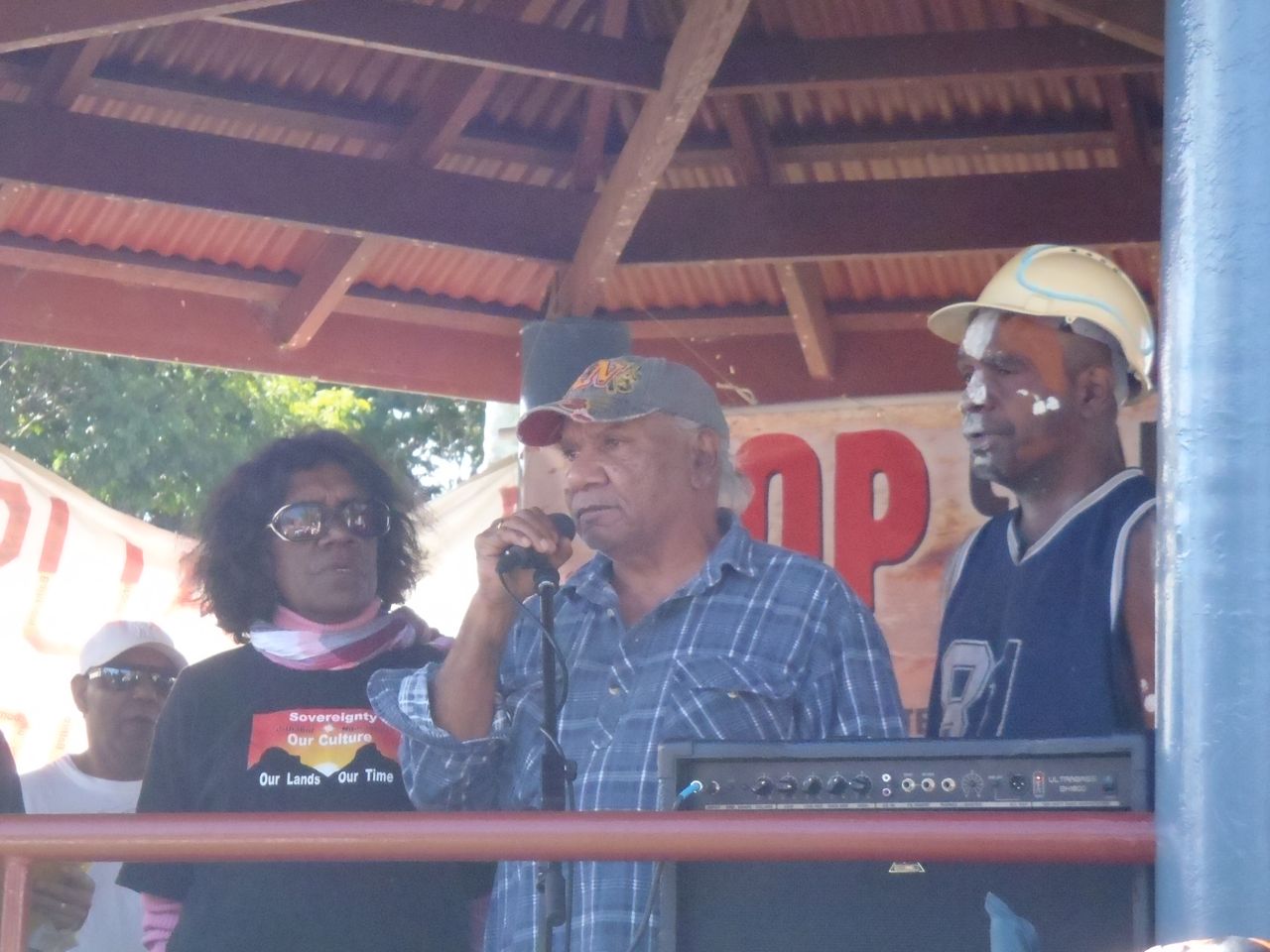
We attended a rally in Northern New South Wales organized by Lock the Gate. Over 3000 people of all demographics peacefully marched the streets of Murwillumba NSW. The march culminated in a rally at the town park, where indigenous leaders, farmers, and concerned citizens educated the public on the dangers of CSG.

So what’s the solution?
All of this nonsense and madness is not necessary. There is no need to ruin groundwater supplies for untold years for a supply of natural gas that may last less than one person’s lifetime.


We have all of the energy we need right now, and it can be created from waste. Yes I am talking about BioGas again, or methane derived from rotting organic matter. This is in fact the same gas that they are extracting from the Coal Seam, so the infrastructure already exists to use methane for electricity generation. We can just substitute BioGas for CSG- no tweaking (or at least very little) needed.

This landscape would be unaffected by small scale BioGas production, unlike CSG mines...

BioGas generation is not complicated. In India households are installing small-scale BioGas Digesters that provide all of their gas needs for cooking, from vegetable scraps! What if we went the next step and connected digesters to septic tanks, and turned potential pollution into electricity?

Keep it Green!

Farms are using methane to power their operations all over the world. Communities are trapping gases from landfills and sewage treatment facilties that would otherwise cause air pollution. This is the industry we need to support on a government level, instead of one that stands to benefit only Big Oil.

Would you mess with this girl?

Please educate yourself on the issue of Coal Seam Gas Mining in your area. Urge your State officials to demand transparency from the Oil Companies about their practices.

Stay tuned for an Update on the Permaculture Tour Australia 2011, for more Solutions To Pollution Through Sustainable Design!

Thanks for reading. Keep the faith.

For more on the issues of CSG:
http://coalseamgasnews.org/

Links specific for Australia:
Concerns over chemicals used in CSG mining:
http://www.abc.net.au/news/stories/2011/02/22/3145060.htm

Pipeline location info:
http://www.qhgp.com.au/

Interactive map for mine locations in QLD:
http://www.dme.qld.gov.au/mines/interactive_resource_data.cfm

Map of mining operations in NSW:
http://www.dpi.nsw.gov.au/minerals/info/project-maps

Apr 30, 2011

Te Wai Pounamu- Greenstone Waters

SWoBs Down Under: Episode 2


Though the North and South Islands of New Zealand are only separated by the 40 mile Cook Strait, they are worlds apart. Entering into the Marlborough sounds we immediately noticed how little development there was, and how much open land.


The South Island is a third larger than the North, yet has a quarter of the population. This translates into large tracts of open land, and unspoiled vestiges of native forests.


Snow capped mountains dominate the backdrop of rugged coastlines.


Heading south down the East Coast, our first stop was the scenic peninsula of Kaikoura, which translates into “Lobster Dinner” from the native Maori tongue. Though we didn’t sample any crayfish, as lobster are called in Kiwi, we did sample some fun little waves at a point outside of town.


A late night internet session soon turned into a jam session at the local pub with Christchurch based band SoulSystem.

These guys really rocked it, and to our surprise we ran into the lead singer Tu at the Gluten Free Bakery he works at in Christchurch 3 days later. Small freakin’ world… but no coincidences.

Loren, Tu, and Aubrey gettin' their Gluten Free Fix

The 6.3 earthquake on February 22nd left the historic town in shambles, including SoulSystem’s sound studio with all their new recordings lost as well as Tu’s house. Despite this Tu was one of the most positive people we met.


Since the first shaker on September 4th, the city has had 1727 aftershocks.


One third of the downtown business district crumbled after the February tremor, the old stone and brick buildings unsuited to the liquefaction of the estuarine soils that the city lies upon. Many of the city’s iconic buildings are gone forever.

The Downtown Business District is pretty shattered...

Unfortunately, almost 180 innocent victims died due to poor location of the city itself.


The city is built on an alluvial flood plane, which is mainly sandy soil filled with water.
When this mixture shakes, it turns to quicksand, and any heavy object resting on top (i.e. a building) rapidly sinks.

Amongst the rubble and shattered lives, we found one kid who was silently leading a quiet revolution.

CJ and his little garden with a big message

Though he may not have even realized it, his small garden out the back of the Camper Van rental company run by his mother, was a beacon in the dark for the residents of Christchurch.

Recycled tires make good raised beds for potatoes and squash

CJ was able to grow a literal cornucopia of produce in a space smaller than most suburban backyards, and all for very little money.

That's a lot of food in a little space

The simple act of growing our own food makes us less reliant on fragile shipping systems, like the harbor at Lyttleton that was almost destroyed in the earthquake.


Lyttleton Harbor- what are we thinking?

Inspired by his simple example, we started the journey over the Arthur’s Pass with the West Coast as our destination.


This pass is one of the only ways to get across the amazingly steep and rugged NZ alps, and also one of the most scenic.


Castle Hill and the stone people of Kura Tawhiti beckoned us from our campervan. “Come play with us!” they shouted in silent ancient voices. “We are the guardians of the universe, and we welcome you.”


They stand waiting, watching, slowly returning to the earth as the rain gently washes them away. They are sentinels of acceptance, showing that love is to let be- to be a part of everything and to be a silent witness of the passing winds.


Arthur’s Pass is truly a mystical place, the place of Te Wai Pounamu- the Greenstone Waters.


The glaciers feed the infinite mountain streams, which feed the land and the people as they wind their way to the sea. This is the Birthplace of the Ocean.

As pure as it gets- roadside fill up


Heading up the West Coast of the South Island, we were engulfed in misty mountains and flourishing flora.


Canyons and glades filled with Nikau palms and waterfalls open to the raging sea. It would take lifetimes to explore this land.


Punakaiki Pancake Rocks

Still, we found evidence of humans and their battle against nature. Dairy farming is one of the largest industries in this area, and NZ as a whole. The land is pushed to the brink, every square inch grazed, sometimes to the mud.

This is not cool, not for the cows or anyone. Pic stolen from UnpureNZ.com

This opens the soil up to the erosive influences of water, which gladly washes away thousands of years of biological work in a moment’s time. The rivers run brown with the product of the forest’s fecundity, added to it a toxic brew of animal manures.
Slippage from over grazing. This soil ends up in rivers filling them with silt.

Golden Bay was a respite, and once again it was no coincidence that we made it to the end of the road, where we found like-minded friends at Tui Community.


Established 28 years ago, Tui may be one of the oldest intentional communities in NZ, if not the world.

Nano and Aubrey prepare apples for canning with a keen young fella

It was a honor to spend time there and get a glimpse of how they have managed to maintain their living situation with 30 residents and the challenges they have faced. Needless to say theirs is a story in itself.

Ponga (tree fern) forests on the land at Tui

Mature orchards dump fruit upon grazing chickens, and we were opportunists in a food forest.


A diet of pineapple guavas, asian pears, and apples fueled us and our new found friends on several adventures around the area.

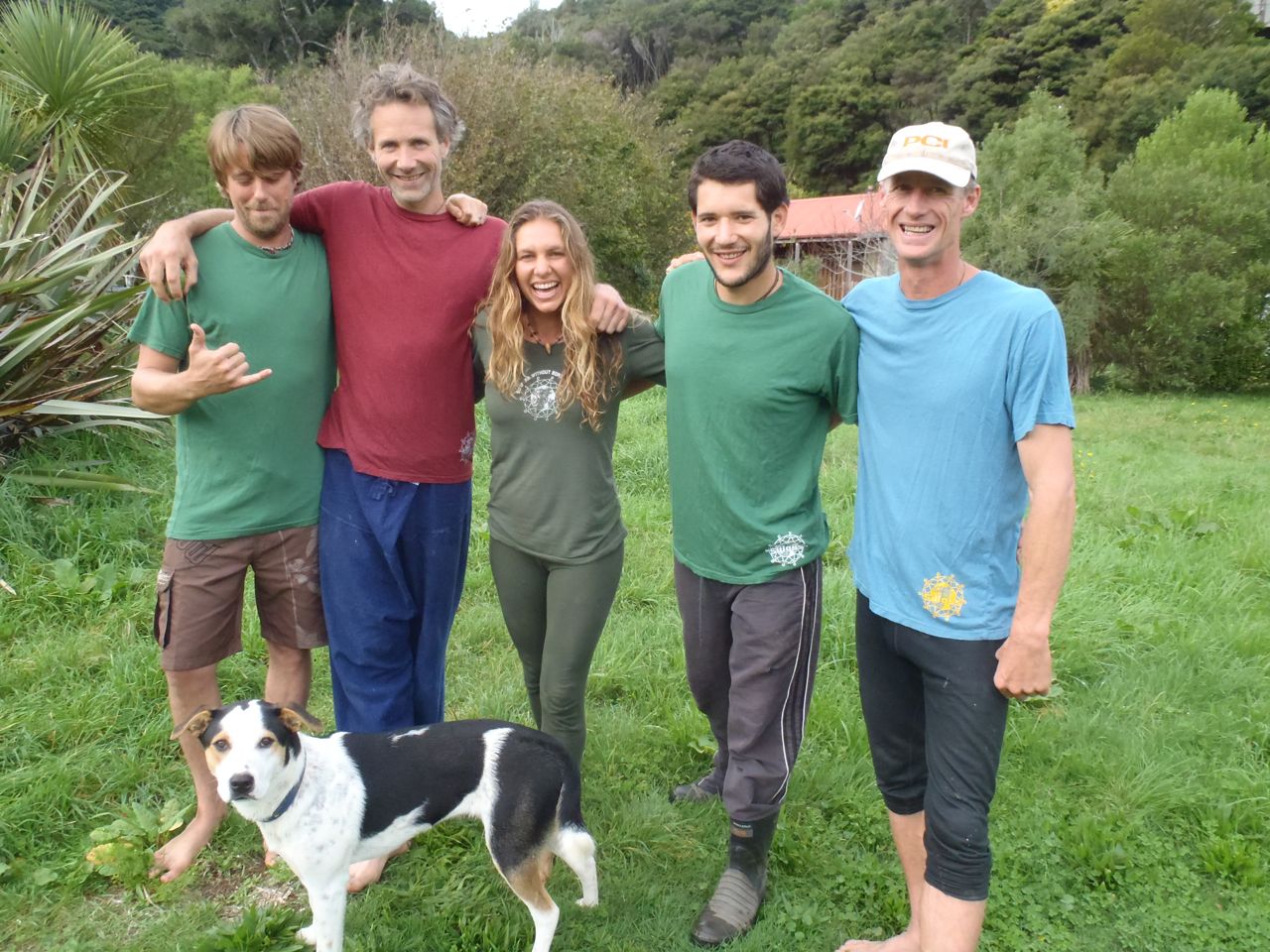
(l to r) Loren, Andrew, Aubrey, Nano, Wyatt, and Muku the dog

Wyatt is a community member and organic farmer, whose specialty is bringing life and commerce back to abandoned orchards. Andrew is an agricultural engineer and inventor, who has created a 3D puzzle based on sacred geometrical solids and magnets. Nano is a Spaniard exploring the New World of Kiwiland.

Andrew and his Sacred Geometry Puzzle

We bid “Farewell” to the Wharariki Spit and Golden Bay, as we reluctantly pushed on back to the North Island.

The walk to Wharariki Beach

Wharariki Beach

You can see why they call it Golden Bay

The ferry crossing is quite an exciting thing, especially in 150 kph winds. Luckily our 600 ft boat didn’t really feel a thing, and we landed safely back in Wellington. These same winds pushed and pulled at out little campervan, its hi-top acting like a sail. We slowly made our way up the West Coast with Taranaki as our goal.

Hurricane Force winds greeted us on the North Island

White knuckled from the most harrowing driving conditions ever, we pulled into Oakura for a little reprieve from the tornado style winds. We were here to visit our friend Clive Neeson, the amazing adventurer behind the film "Last Paradise".


Clive is a scientist and inventor, engineer and film-maker. He has spent the better part of his life traveling and documenting the antics of the thrill-seeking Kiwi. Archive footage from 45 years of work has been compiled into one of the most inspiring and incredible films on adventure sports and environmentalism we have ever seen.


Taranaki was also host to the ASP Womens Surf Competition, and the local community was given a great show from some of the best women surfers on Earth. Conditions calmed as the winds dropped to only 50 kph offshore, and the contest was able to continue on with Sally Fitzgibbons taking the win.

New Plymouth Mayor Harry Duynhoven, Clive Neeson, and Loren Luyendyk at the ASP banquet

Holly and Barton Lynch with Clive Neeson and Aubrey Falk

We participated in a dune planting with the New Plymouth Regional Council as part of the ASP event, setting out hundreds of spinifex grass starts to hold back the erosive forces of the wind and ocean. This led to a fortuitous meeting, as these things do.


Dune plantings at Ahu Ahu beach

David Marshall gave us a tour of his family’s incredible property with several bungalows constructed from salvaged materials. Ahu Ahu Beach Villas is the business he created with his wife Naula on the coastal ranch.

David showing us the cottage built from recycled materials

The site offers unique and luxurious accommodations with an eco-twist. The Lodge could be one for Hobbits, as the roof is an extension of the lawn above. You would never see the building from on high, as it blends into the landscape.


The next day we grabbed a few waves from one of the 50 local spots. Clean lines peeled along a rocky point into a scenic bay. The local boys showed us how to grab a snack from the rocks after a session, all the while active volcano Mount Taranaki loomed ominously in the background.


Taranaki also offered us a glimpse into the future of farming for this area and the world. A local pig farmer was recently given an award for environmentally beneficial resource recovery- or turning pig shit into electricity.


The Lepper Trust is showing by example how a “waste” can be converted into a resource. Complaints from encroaching suburbanites on his once rural pig farm led Steve Lepper to develop a BioGas Digester to process the pig manure into methane, which is burned in a generator to provide the farm with two-thirds of their energy needs.


He is also left with a compostable product, which he sells to gardeners and farmers. “Grunt” as it’s called, is really a by-product of the methane digestion process.


Methane is one of the most powerful “greenhouse gasses” (GHGs), and NZ is one of the leading producers of the stinky stuff. Methane comes from rotting organic matter, and the 60 plus million sheep and 10 million cows are burping and pooping out tons of the stuff every day. This is an opportunity for energy independence and private rural enterprise.


A full 90% of the methane produced by NZ is from agriculture. Cows produce about the equivalent of 500 liters of gaseous methane per day through burping, which is about 0.5 liters of petrol (1/8th gallon of gas). Do the math: 0.5 liters x 10,000,000= 5,000,000 liters or 1,250,000 gallons of gas being belched into the atmosphere every day, just from cows in NZ alone. Scary to think there is a proposal to used genetically modified bacteria in the guts of ruminants to decrease belching and therefore methane. What are we thinking?


To catch all of this may be practically impossible, but to catch some of it may prove profitable. It is estimated that by catching 10% of the manure from dairy cows, it would be possible to keep 24 million tonnes of carbon dioxide equivalents out of the atmosphere per annum, which would be like taking over 4 million cars off the road for a full year- more than the population of NZ itself! And, this can be turned into electricity!

Furthermore, the Emissions Trading Scheme outlined by NZ in response to the Kyoto Protocol may allow farmers to sell carbon credits for converting their farm wastes to methane, while saving themselves money on electricity costs. This may prove to be not only a good idea, but a mandate, as these reductions in GHGs are required to be compliant with the Kyoto Protocol.

Studies currently being carried out in the USA, NZ, and Australia are looking into the use of certain plowing techniques and livestock management regimes that may indeed use pasture to sequester CO2. Keyline Plowing (deep ripping) and Holistic Management practices improve soil quality and sequester atmospheric CO2 as a by-product. Who can argue with that?

The Keyline Plow

Darren Doherty Keyline Plowing the Orella Ranch in Santa Barbara

The soil is the best place to store and sequester carbon, and unfortunately current farming practices actually release, or oxidize, carbon into the atmosphere. Practices such as tillage or intensive livestock grazing may damage the soil’s ability to hold carbon, or store it.

Fungal hyphae are the primary decomposers on Earth

Furthermore it has been shown that organic farming increase the soil’s ability to sequester and store carbon. Chemical fertilizers, herbicides, and pesticides kill soil microorganisms that are responsible for converting organic matter into plant available nutrients. These microorganisms are the building blocks for life and represent a significant portion of the total biomass on the Earth.

We are all in this together- so we are all to blame, and we are all responsible to help protect, preserve, and regenerate this beautiful Planet that so graciously gives us life. Thanks for reading the MegaBlog.


Stay tuned for Australia mate!